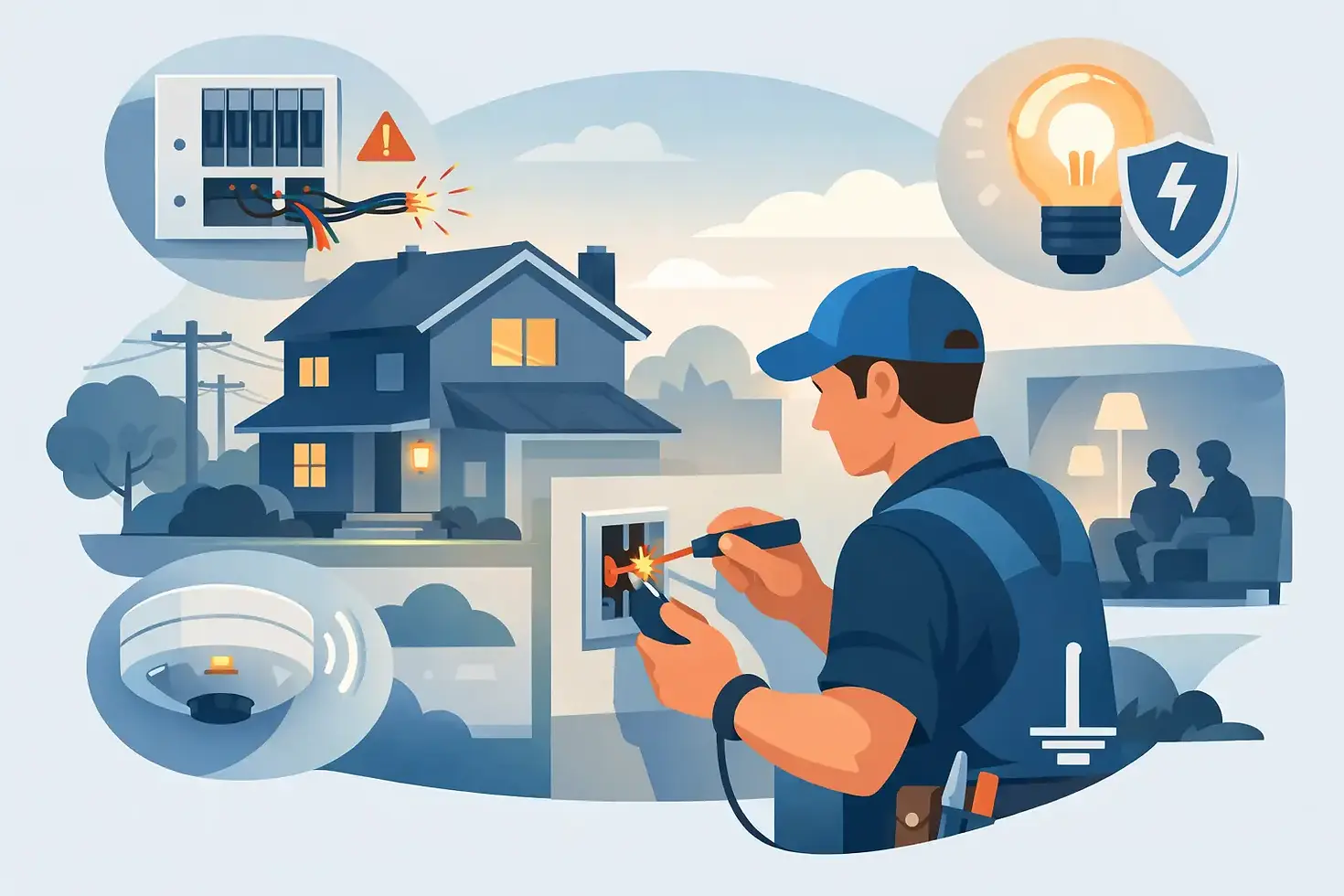
Residential Electrical Repairs That Keep Homes Safe

A breaker that keeps tripping is more than an inconvenience when it interrupts dinner, shuts down a home office, or leaves a bedroom without power. It is often your electrical system signaling that something needs attention. Professional residential electrical repairs help Southern California homeowners address those warning signs before they become damaged equipment, recurring outages, or a serious safety concern.
Electrical issues are not always dramatic. A warm outlet, flickering lights, a buzzing panel, or a switch that works only sometimes can point to a loose connection, an overloaded circuit, aging components, or a problem farther upstream. The right repair begins with careful diagnosis, not a quick guess or a temporary reset.
When Residential Electrical Repairs Should Not Wait
Some electrical problems can be scheduled promptly during normal service hours. Others deserve immediate attention. If you smell burning near an outlet or electrical panel, see smoke or sparks, notice discoloration around a receptacle, or lose power after a breaker will not reset, stop using that circuit. Turn off power at the panel only if it is safe to do so, and contact a qualified electrician.
Repeated breaker trips also deserve a professional evaluation. A breaker is designed to interrupt power when a circuit is overloaded or a fault is detected. Resetting it once after a clear overload may be reasonable. Resetting it again and again without knowing why it tripped can allow an underlying problem to continue.
Homes in San Diego, Orange County, Los Angeles, Riverside County, and the Inland Empire often have a mix of electrical needs. An older home may have original wiring or a limited panel. A newer home may have growing power demands from EV charging, high-efficiency HVAC equipment, home offices, pool equipment, and smart devices. The issue is not always the age of the house. It is whether the electrical system is properly matched to how the home is used now.
Common Problems a Qualified Electrician Can Diagnose
Electrical repairs should be based on testing and inspection, especially when symptoms overlap. Flickering lights, for example, may come from a loose bulb or fixture connection. They can also indicate a weak circuit connection, a failing switch, an overloaded circuit, or a service-related concern. The fix depends on the cause.
Breakers That Trip or Fail to Reset
An overloaded circuit is common in kitchens, garages, bedrooms used as offices, and areas with portable heaters or window AC units. The repair may be as straightforward as redistributing loads or adding a dedicated circuit. In other cases, the electrician may find a damaged receptacle, a wiring fault, moisture intrusion, or a failing breaker.
A breaker that feels hot, makes unusual noise, or will not stay on should never be forced. Panel work requires the right training, equipment, and safety procedures. A technician can test the circuit, inspect the panel, and explain whether a targeted repair or an upgrade is the better long-term choice.
Dead Outlets, Loose Switches, and GFCI Problems
A dead outlet is not always a failed outlet. It may be connected to a tripped GFCI receptacle elsewhere, controlled by a switch, or affected by a damaged connection in the circuit. Bathrooms, kitchens, garages, laundry areas, outdoor spaces, and other locations near water need properly operating GFCI protection.
Outlets that feel loose, have cracked covers, or no longer hold plugs securely should be repaired. A plug that falls out can create poor contact and heat at the receptacle. Small details matter in electrical work because connection quality has a direct effect on reliability and safety.
Dimming Lights and Power Changes
Lights that dim briefly when an air conditioner starts may be a normal sign of motor startup in some homes. Heavy dimming, persistent flickering, or changes that affect multiple rooms are different. They can indicate circuit loading issues, a connection problem, or a concern with the service equipment.
This is where a broad view helps. Because cooling equipment is one of the largest electrical loads in many Southern California homes, an electrician may need to consider the panel, dedicated circuits, disconnects, and HVAC equipment together. Treating one symptom without assessing the system can leave the real cause unresolved.
A Safe Repair Is More Than Replacing a Part
The visible problem is not always the full problem. Replacing a breaker without identifying why it tripped, or replacing an outlet without checking the connection feeding it, may only postpone the next service call. Quality residential electrical repairs follow a clear process: identify the reported issue, test the affected circuit and components, verify the source of the fault, complete the repair, and confirm safe operation.
Depending on the work, that process may include checking breaker performance, circuit load, grounding and bonding, receptacle polarity, wire connections, panel condition, and code requirements. The goal is practical: restore power safely, reduce the chance of repeat issues, and give the homeowner a clear picture of what was found.
Code-conscious work is especially valuable when repairs connect to a larger home improvement project. A garage outlet may be sufficient for basic tools but not for an EV charger. A panel may support daily household use but have little room for a new circuit. An electrician can help distinguish between a repair that solves the immediate problem and an upgrade that better supports the home’s next stage.
Repair or Upgrade: How to Make the Right Call
Not every electrical issue requires a panel upgrade. If a single outlet has failed or one circuit has a loose connection, a focused repair is usually the sensible solution. Homeowners should not be pushed into replacing equipment that is operating safely and has adequate capacity.
An upgrade becomes worth discussing when the panel is damaged, outdated, consistently overloaded, lacks available spaces for needed circuits, or cannot support planned electrical additions. It can also make sense when a home is adding EV charging, central air conditioning, a heat pump, an induction range, a spa, or major remodeling work.
Budget matters, and the most expensive option is not automatically the best option. A dependable contractor should explain the repair path, the upgrade path if relevant, expected benefits, and any work that should be planned for later. That gives homeowners a way to make a sound decision without unnecessary complexity.
What Homeowners Can Do Before Service Arrives
You do not need to troubleshoot live wiring to provide useful information. Note which rooms or devices are affected, whether the issue began after using a specific appliance, and whether a breaker trips immediately or only under load. If safe, take a photo of the panel directory and the affected outlet or fixture. These details can speed up diagnosis.
Avoid removing panel covers, bypassing breakers, using damaged extension cords, or continuing to use an outlet that is warm, scorched, loose, or sparking. Do not replace a breaker with a larger one to stop trips. Breaker sizing is tied to the wiring and circuit design, and an oversized breaker can create a fire risk.
For rental properties, prompt communication matters just as much. Property managers should document tenant reports, act quickly on possible hazards, and keep records of completed repairs. Reliable electrical systems protect residents, help prevent emergency calls, and support the long-term condition of the property.
Local Service That Looks Beyond the Immediate Symptom
A good electrical repair experience should feel straightforward. You should know what is being checked, what failed, what needs to be repaired, and whether any future work is recommended. At CoolVolt USA, that service-driven approach extends across electrical and HVAC needs, helping homeowners coordinate essential comfort and power work with one local team.
Electrical systems quietly support nearly every part of home life, from charging a phone to running cooling equipment during a hot Southern California afternoon. When something changes, responding early is usually safer, simpler, and less disruptive than waiting for a small warning sign to become a larger repair.


Comments