12 Signs of Faulty Wiring You Shouldn’t Ignore

A breaker that trips once after a storm may be doing its job. A breaker that trips every time you run the microwave, AC, or a few everyday appliances is telling you something else. The signs of faulty wiring are often easy to dismiss at first, but electrical problems can escalate from an inconvenience to a shock or fire hazard without much warning.
For homeowners, property managers, and business owners across Southern California, the right response is not guesswork or a quick DIY patch. It is recognizing the warning signs, limiting risk, and having a qualified electrician identify the source of the problem.
12 Signs of Faulty Wiring to Take Seriously
1. Breakers trip repeatedly
Circuit breakers are designed to shut off power when a circuit is overloaded or unsafe. One trip may come from plugging too many high-demand devices into the same circuit. Repeated trips, especially with normal use, can point to a short circuit, a damaged appliance, loose wiring, or an undersized circuit.
Do not keep resetting a breaker that immediately trips again. That safety device is responding to a condition that needs to be diagnosed.
2. Lights flicker, dim, or brighten unexpectedly
A single flickering bulb can be as simple as a loose bulb or a failing light fixture. Flickering throughout a room, lights dimming when the AC starts, or lights that suddenly brighten can signal a loose connection, overloaded circuit, or service issue.
In older homes, this may also indicate wiring that was not designed for modern electrical demand. If the pattern affects multiple rooms or the entire property, schedule an electrical inspection promptly.
3. Outlets or switches feel warm
Outlets, switches, and faceplates should not feel hot during ordinary use. Mild warmth from a plugged-in charger is different from heat at the wall itself. A warm outlet or switch may result from a loose connection, an overloaded circuit, damaged wiring, or a device that is failing internally.
Turn off the circuit if it is safe to do so, stop using the outlet, and arrange service. Never cover the issue with a power strip, extension cord, or a new faceplate.
4. You smell burning or see discoloration
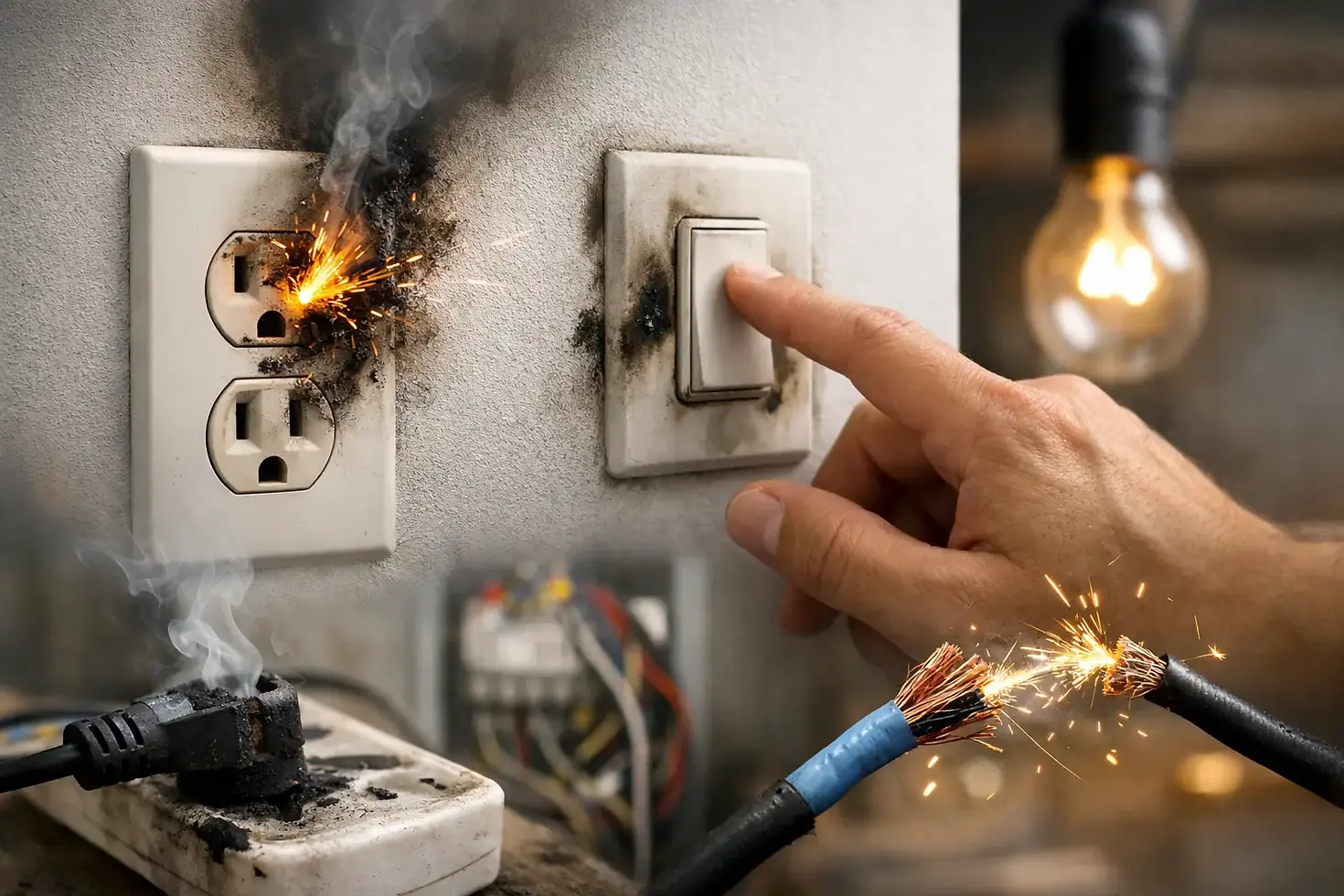
A sharp burning smell near an outlet, panel, switch, or appliance deserves immediate attention. Brown marks, yellowing, melted plastic, scorch marks, or smoke are clear signs that excessive heat has been present.
Shut off power to the affected circuit if you can do so safely. If there is active smoke, sparking, or fire, leave the area and call emergency services. Do not attempt to investigate inside an electrical panel or outlet box.
5. Outlets spark, buzz, or make crackling sounds
A small spark when plugging in an appliance can occasionally happen from a normal electrical connection. Frequent sparking, a large spark, buzzing, crackling, or a popping sound is not normal. These symptoms can indicate arcing, loose terminals, deteriorated wiring, or an overloaded connection.
Arcing produces intense heat in a small area. That is why a noisy outlet should be taken seriously even if the appliance still works.
6. You rely on extension cords and power strips every day
Extension cords are intended for temporary use, not as a permanent substitute for properly located outlets. A room full of power strips may mean the electrical system no longer matches how the space is used.
This is common in home offices, garages, older kitchens, retail spaces, and properties that have added equipment over time. The answer may be additional dedicated circuits or new outlets, not another adapter plugged into another adapter.
7. Plugs fit loosely in outlets
A plug that slips out, hangs loosely, or only works when positioned a certain way can mean the outlet’s internal contacts are worn. That weak connection can create heat and intermittent power.
Replace the outlet through a qualified electrician, particularly if it is near water, outdoors, in a garage, or serving high-use equipment. For commercial properties, loose outlets can also lead to equipment interruptions and unnecessary downtime.
8. You receive shocks or tingling sensations
Even a mild shock from a switch, appliance, faucet, or metal fixture should not be ignored. It may be caused by improper grounding, damaged insulation, faulty equipment, or a wiring defect.
Stop using the affected device or outlet. If the sensation happens around plumbing, outdoors, or near a wet area, treat it as urgent. Water and electricity are a particularly dangerous combination.
9. The electrical panel shows warning signs
Your panel is the control center of the property’s electrical system. Rust, corrosion, heat marks, buzzing, a burning odor, loose breakers, or labels that do not match the circuits all warrant professional attention.
An older fuse box, a crowded panel, or a panel that lacks capacity for an EV charger, central AC, or other major loads may not be faulty by itself. Still, it may need testing or an upgrade to safely support the way the building operates now.
10. Appliances lose power or perform inconsistently
If a refrigerator, HVAC system, computer, or other appliance turns off unexpectedly, it is tempting to assume the appliance is the problem. Sometimes it is. But recurring power loss, especially at multiple devices on the same circuit, can point to a wiring or connection issue.
A proper diagnostic process checks both the equipment and the electrical supply. Replacing an expensive appliance without identifying the real cause can waste time and money.
11. Rodent damage, water damage, or recent construction is involved
Chewed wires, water intrusion, roof leaks, plumbing leaks, and renovation work can all damage electrical wiring behind walls or above ceilings. The issue may not be visible at the outlet or panel.
If you notice electrical symptoms after a leak, pest problem, remodel, or wall penetration for plumbing or cable work, tell the electrician. That context helps narrow the inspection and avoid missing hidden damage.
12. Your property has aging or ungrounded wiring
Older wiring systems can remain in service for years, but age changes the risk calculation. Brittle insulation, outdated materials, ungrounded outlets, and prior DIY modifications can create hazards that are not obvious during normal use.
Older homes in Los Angeles, Orange County, San Diego, and the Inland Empire often have electrical systems that predate modern appliance loads. A panel and wiring assessment can clarify whether targeted repairs are enough or whether an upgrade is the more practical long-term choice.
What to Do When You Notice Faulty Wiring Symptoms
The safest next step depends on the symptom. If there is smoke, fire, active sparking, or a strong burning smell, move people away from the area and contact emergency services. Do not touch a hot outlet, damaged cord, or electrical panel.
For non-emergency concerns, stop using the affected outlet, switch, or appliance. If you can confidently identify the circuit, turn it off at the panel. Then schedule a qualified electrical diagnostic visit rather than repeatedly resetting breakers or trying to repair concealed wiring yourself.
A professional inspection may include testing circuits, outlets, breaker performance, grounding, load capacity, and visible connections. The goal is to find the underlying failure, not simply restore power for the moment.
When a Repair Is Enough and When an Upgrade Makes Sense
Not every wiring issue requires a full rewire or panel replacement. A failed outlet, loose connection, damaged section of wire, or overloaded branch circuit can often be repaired directly. The right scope depends on the property’s age, condition, electrical load, and plans for the space.
An upgrade becomes more likely when a panel is at capacity, circuits are consistently overloaded, major equipment is being added, or outdated wiring is widespread. EV charging stations, central air conditioning, electric cooking, workshop tools, and commercial equipment can all change a building’s power needs.
A trustworthy electrician should explain the findings in plain language, identify immediate safety priorities, and separate necessary work from optional improvements. At CoolVolt USA, that practical approach helps customers make informed decisions without unnecessary complexity.
Electrical warning signs rarely become more convenient with time. Addressing them early protects the people, equipment, and property that depend on your power system every day.


Comments